
Why RAAS
RAAS: AN Essential third mechanism for optimal MAP control
Vasoregulatory Systems
Harness the power of an underutilized system
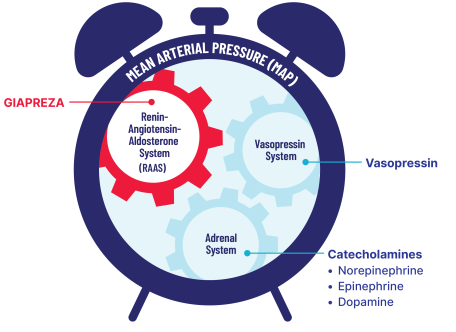
Traditional SOC vasopressors address the adrenergic and vasopressin systems that regulate blood pressure, neglecting RAAS, the third pathway that helps control MAP.1-4
RAAS is crucial for producing ANG II, a naturally occurring peptide hormone that triggers vasoconstriction and increases blood pressure.5,6
GIAPREZA is the first and only synthetic human ANG II treatment—the only RAAS regulator available to raise MAP in adults with septic and vasoplegic shock.4,5
Targeting RAAS
Only GIAPREZA works via the RAAS pathway to stabilize MAP
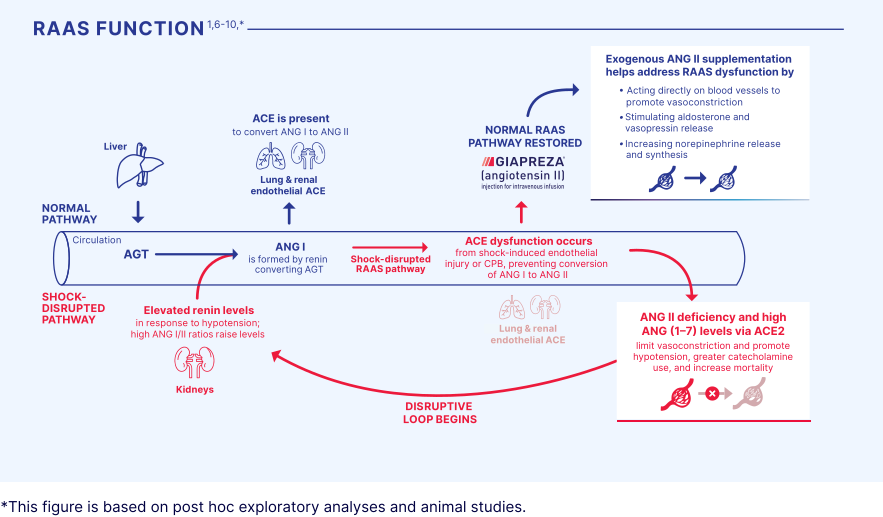
In patients with shock, the RAAS pathway may be disrupted by an ACE deficiency, leading to abnormally high ANG I/II ratios and ANG (1–7) levels. This disruption can result in increased catecholamine use and can trap patients in a potentially fatal cycle.6
Slide image to view more
BREAK THE
DISRUPTIVE LOOP
GIAPREZA is a catecholamine-sparing agent that regulates RAAS to stabilize MAP in a median of 5 minutes.5,6,11-13
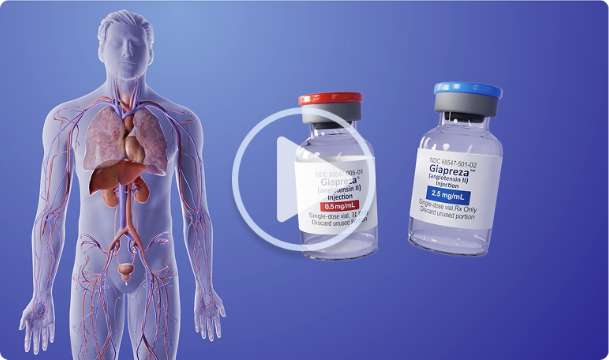
Watch how GIAPREZA works
Traditional SOC
Traditional SOC vasopressors can leave too many patients
at life-threatening risk
The longer hypotension persists, the higher the mortality risk14,*

If low MAP persists for 0 to 2 hours, mortality risk can reach up to 31%14

If low MAP persists for 6 to 8 hours, mortality risk can reach up to 75%14
*From a retrospective analysis of 5,347 patients with distributive shock.
Connect with a GIAPREZA sales
representative for information and support.
ACE=angiotensin-converting enzyme; AGT=angiotensinogen; ANG=angiotensin; CPB=cardiopulmonary bypass; SOC=standard of care.
References:
- Klijian A, Khanna AK, Reddy VS, et al. Treatment with angiotensin II is associated with rapid blood pressure response and vasopressor sparing in patients with vasoplegia after cardiac surgery: a post-hoc analysis of Angiotensin II for the Treatment of High-Output Shock (ATHOS-3) study. J Cardiothorac Vasc Anesth. 2021;35(1):51-58. doi:10.1053/j.jvca.2020.08.001
- Khalil B, Rosani A, Warrington SJ. Physiology, Catecholamines. StatPearls; 2024. Accessed December 12, 2025. https://www.ncbi.nlm.nih.gov/books/NBK507716/
- Demiselle J, Fage N, Radermacher P, et al. Vasopressin and its analogues in shock states: a review. Ann Intensive Care. 2020;10(1):9. doi:10.1186/s13613-020-0628-2
- National Center for Biotechnology Information. PubChem Compound Summary for CID 172198, angiotensin II. Accessed January 14, 2025. https://pubchem.ncbi.nlm.nih.gov/compound/Angiotensin-II-human
- GIAPREZA. Prescribing information. La Jolla Pharmaceutical Company; 2021.
- Bellomo R, Forni LG, Busse LW, et al. Renin and survival in patients given angiotensin II for catecholamine-resistant vasodilatory shock. A clinical trial. Am J Respir Crit Care Med. 2020;202(9):1253-1261. doi:10.1164/rccm.201911-2172OC
- Andrews L, Benken J, Benedetti E, et al. Effects of angiotensin II in the management of perioperative hypotension in kidney transplant recipients. Clin Transplant. 2022;36(9):e14754. doi:10.1111/ctr.14754
- Fountain JH, Kaur J, Lappin SL. Physiology, Renin Angiotensin System. StatPearls; 2023. Accessed January 14, 2025. https://www.ncbi.nlm.nih.gov/books/NBK470410/
- Wang Y, Seto S-W, Golledge J. Angiotensin II, sympathetic nerve activity and chronic heart failure. Heart Fail Rev. 2014;19:187-198. doi:10.1007/s10741-012-9368-1
- Bitker L, Burrell LM. Classic and nonclassic renin-angiotensin systems in the critically ill. Crit Care Clin. 2019;35(2):213-227. doi:10.1016/j.ccc.2018.11.002
- Buckley MS, Barletta JF, Smithburger PL, et al. Catecholamine vasopressor support sparing strategies in vasodilatory shock. Pharmacotherapy. 2019;39(3):382-398. doi:10.1002/phar.2199
- Supplementary appendix to: Khanna A, English SW, Wang XS, et al. Angiotensin II for the treatment of vasodilatory shock. N Engl J Med. 2017;377(5): 419-430. doi:10.1056/NEJMoa1704154
- Khanna A, English SW, Wang XS, et al. Angiotensin II for the treatment of vasodilatory shock. N Engl J Med. 2017;377(5):419-430. doi:10.1056/NEJMoa1704154
- Vincent J-L, Nielsen ND, Shapiro NI, et al. Mean arterial pressure and mortality in patients with distributive shock: a retrospective analysis of the MIMIC-III database. Ann Intensive Care. 2018;8(1):107. doi:10.1186/s13613-018-0448-9
IMPORTANT SAFETY INFORMATION
Indication
GIAPREZA® (angiotensin II) increases blood pressure in adults with septic or other distributive shock.
Contraindications
None.
Warnings and Precautions
The safety of GIAPREZA was evaluated in 321 adults with septic or other distributive shock in a randomized, double-blind, placebo-controlled study, ATHOS-3. There was a higher incidence of arterial and venous thrombotic and thromboembolic events in patients who received GIAPREZA compared to placebo-treated patients in the ATHOS-3 study (13% vs. 5%). The major imbalance was in deep venous thromboses. Use concurrent venous thromboembolism (VTE) prophylaxis.
Adverse Reactions
The most common adverse reactions reported in greater than 10% of GIAPREZA-treated patients were thromboembolic events. Adverse reactions occurring in ≥4% of patients treated with GIAPREZA and ≥1.5% more often than placebo-treated patients in the ATHOS-3 study were thromboembolic events (including deep vein thrombosis), thrombocytopenia, tachycardia, fungal infection, delirium, acidosis, hyperglycemia, and peripheral ischemia.
Drug Interactions
Angiotensin converting enzyme (ACE) inhibitors may increase response to GIAPREZA. Angiotensin II receptor blockers (ARBs) may reduce response to GIAPREZA.
You are encouraged to report negative side effects of prescription drugs to the FDA.
To report SUSPECTED ADVERSE REACTIONS, please contact:
Before administering, please see the Full Prescribing Information for GIAPREZA.